Is that real money
on the stream?
Someone bets a thousand a spin for six hours and hits a max win. The obvious question is whether the balance is theirs. Here is what is actually on record, what is alleged, and what nobody has proven either way.
What has been admitted openly
The clearest statement comes from xQc, who is unusual in describing the mechanics rather than leaving them to speculation. In 2022 he explained how his own gambling sponsorship worked and said that some other streamers' balances are fake, describing his own arrangement as a "raw balance" — his own money with more added on top.
He has also confirmed on stream that he is paid by a casino to produce gambling content, after previously disputing that this was the case. In separate comments he described being paid a flat fee per gambling session regardless of how long he streamed or how much he wagered.
In late 2025 he went further, accusing other streamers of playing with fake balances and arguing from the mathematics: he described people staking fifty dollars and pulling out six figures, while his own far larger stakes produced a fraction of that frequency of big wins. That reasoning is worth noting because it is the same argument a viewer can make from home — return to player does not vary by personality.
The incidents that raised suspicion
In 2019 a stream glitch appeared to show one prominent streamer's real-money balance matching a demo account balance, which is not something normal casino software produces. More recently another streamer publicly accused him of using fake balances after a very large win did not initially appear on global leaderboards.
Both are worth stating precisely, because precision is the whole point here: these accusations remain unproven. Nobody established what was actually happening with that balance, and that is the pattern across the category — viewers cannot verify it, casinos do not disclose it, and streamers rarely confirm it.
We are deliberately not repeating every allegation circulating about named individuals. Some claims made about this industry are documented in the press; others are asserted by people with a commercial interest in the answer. This page sticks to the first category.
Why the arrangement exists
Industry analyses describe contracts under which casinos load accounts with sponsored balances and expect large on-camera reactions in return, leaving the streamer facing little or no real financial risk while the content presents every spin as consequential.
The logic is straightforward from the operator's side. A streamer risking their own money produces mostly boring content, because most sessions are unremarkable losses. A streamer who cannot lose produces highlights on demand.
What it does to the viewer
Three effects, and the third is the one that actually costs people money.
It manufactures trust. Watching someone you follow stake enormous sums on a site reads as evidence the site is safe. That inference only holds if the sums are real.
It distorts your sense of the odds. A feed full of clips of ordinary-looking people winning millions suggests those outcomes are common. They are not. Selection alone would do this even with real money — every big win gets clipped and no ordinary session does — and sponsored balances multiply it.
It moves what counts as a normal stake. Most people gamble disposable income. Watching thousand-a-spin play for hours quietly resets the reference point for what a normal bet looks like, and people scale up to match something that was never real. Research on gambling streams finds they intensify cravings rather than satisfy them, with viewers reporting increased real-money gambling afterwards, and between roughly a third and a half of minors aged 11 to 18 have been exposed to this content.
Platforms have already responded
Twitch banned slots, roulette and dice content from unlicensed gambling sites in 2022 and later added stricter labels for the gambling content it still permits. YouTube went further from March 2025, restricting creators from verbally promoting or showing logos of unapproved operators and age-gating casino content.
That is a reasonable indicator of how seriously the problem is taken: platforms rarely restrict a lucrative content category on a hunch.
How to read a gambling stream
Ask whether the stake makes sense against the streamer's plausible bankroll. Ask why the big wins arrive so much more often than they would for you at the same stakes. Ask whether the arrangement has ever been disclosed — a flat fee per session is a very different thing from someone risking their own savings, and only one of them is disclosed often.
None of this requires assuming anyone is lying. It requires noticing that you cannot tell, and pricing your trust accordingly.
Duel's stated position
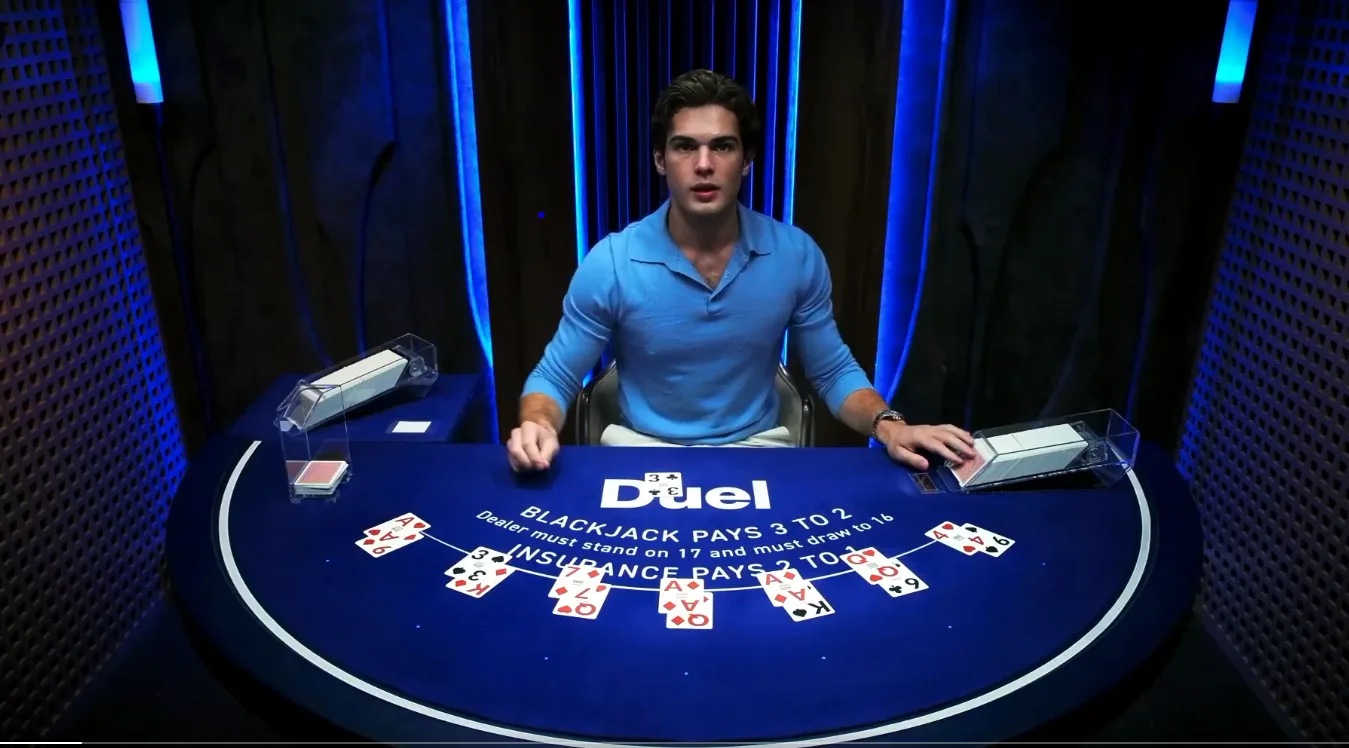
Duel says every wager on its platform is real money at one to one, with no fake balances, no loss coverage and no arrangements that change the amount actually at risk — and it has been openly critical of the practice across the industry.
That is a claim, not something we can audit from outside. It is at least a specific and falsifiable one, which is more than the industry norm of saying nothing at all.
Related: comparing casinos by net edge and why a slot cannot be verified.
Check the maths, not the vibes
RTP does not change by streamer. The numbers are the same for everyone.
Play at Duel